What Is Levain and How Does It Differ from a Yeast Starter?
Why Does It Have So Many Names?
Different names were developed in different places and regions, and everyone’s own techniques and recipes have actually transformed what was once a simple concept.
It is said to be a French term for “levain.” Some say that the term “sourdough starter” is specific to starters created on the West Coast of the United States.
Levain, sourdough starter, chef, lievito madre, mother dough, main starter, marş, polish, and many other names are used—and all of this can be a bit confusing. What are they, and when are they used? There are two basic forms of sourdough bread baking: sourdough starter and levain. So, with these two and many other names out there, let’s take a general look at the differences between a levain and a sourdough starter.
Similarities and Differences:
Each has a different ratio of flour to water, which is why there are so many different types of yeast cultures. Essentially, all of these yeasts consist of flour, water, and a small amount of yeast that are left to ferment beforehand to produce the final dough.
Extended fermentation time provides your dough with additional fermentation byproducts in the form of organic acids and alcohols—which contribute to flavor. It is used in varying ratios to influence the populations of lactic acid bacteria (LAB) and wild yeast. The final shape of the dough has an impact on the resulting flavor and texture, depending on the fermentation process.
The bread you make using all these different yeast cultures helps give it unique qualities by adding flavor and aroma.
Essentially, both a yeast starter and a levain fall into the same category. Each is mixed in advance, left to ferment, and then used directly in the dough (the levain and, sometimes, the starter). These cultures are refreshed by being fed regularly to keep them alive and strong.
Through natural selection (where the weak die off and the new generation of organisms, replicated through division, adapts to the environment), the microorganisms in the yeast become stronger and begin to produce rich flavors and aromas through various alcohols and acids. Many of you may be familiar with the question, “How old is the yeast?” There are producers with 2-year-old, 8–10-year-old, and even 80–100-year-old yeast cultures. They continue to care for the yeast across generations by dividing, feeding, and propagating it. However, older yeast isn’t always the best. Even young yeast can yield better results than older yeast.
Let’s Start from the Beginning
We can distinguish between two different types based on preferences
Preferences can be divided into two main categories.
- Baker’s Yeast: Types of fresh or dry yeast that can be added directly to the dough or activated beforehand and then added to the dough.
- Sourdough starter: A starter that is continuously maintained; the portion needed for baking is used, and the remainder is fed and reused multiple times.
The second type, wild yeast, is what we refer to as a sourdough starter, and we will examine it more closely to gain a scientific understanding of sourdough culture.
What Is a Sourdough Starter?
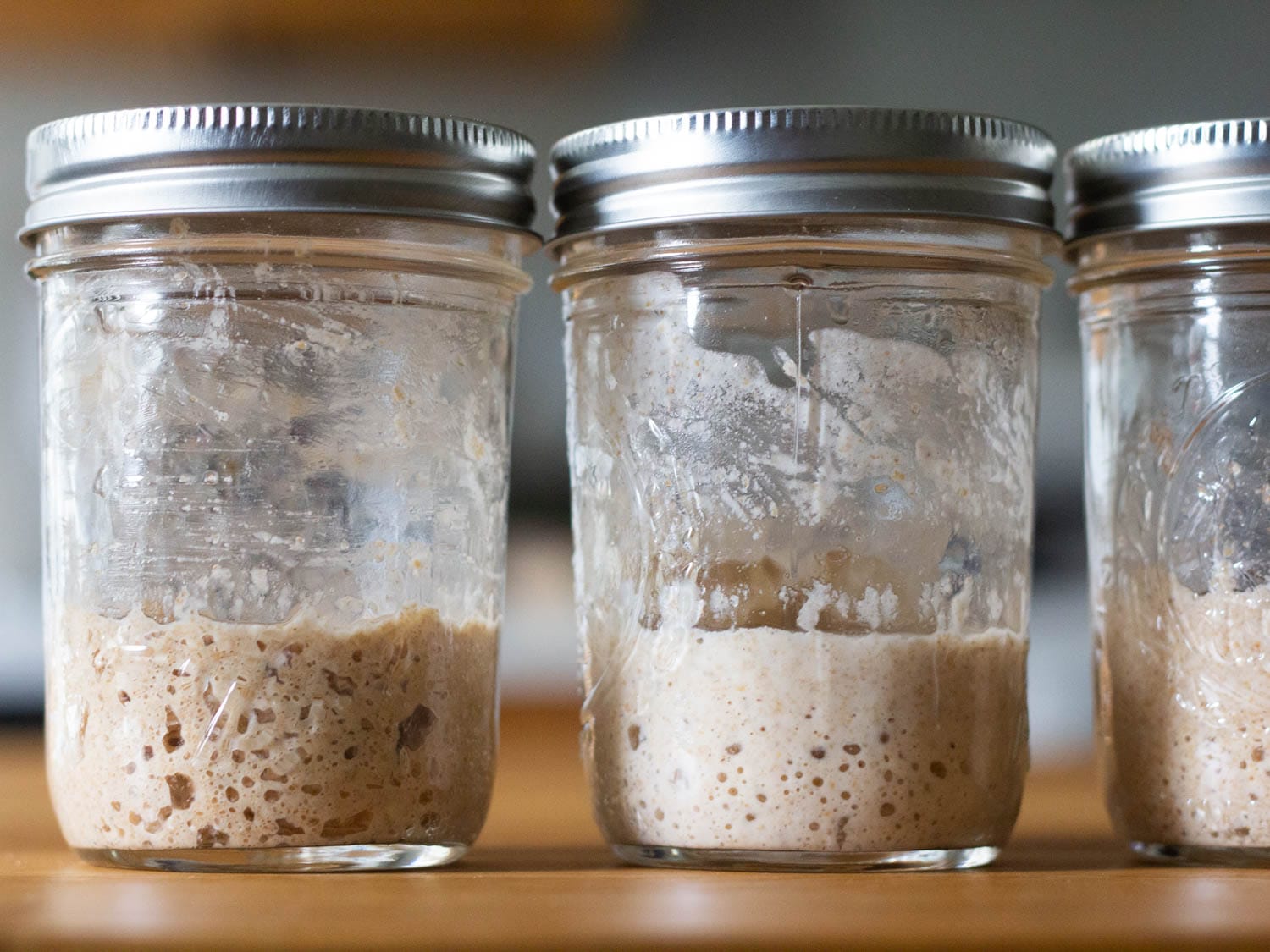
After mixing flour and water, this is a sourdough starter that allows various microorganisms in the air—such as wild yeast and bacteria—to grow and multiply within the flour. Over time, these microorganisms in the flour and water form a stable population and thrive by consuming the sugars and proteins in the flour.
To summarize the process of bread making: when we knead the dough, the elastic structure formed—known as gluten—creates elastic pockets within the bread that prevent air from escaping. During fermentation, the microorganisms we use produce the gas that causes the dough to rise and the acidic molecules that give it its flavor. These flavor molecules are quite different from those produced by commercial fresh or dry yeasts.
What Is Sourdough?
Levain is also known as a starter or sourdough starter. It is actually a byproduct of the sourdough starter; it refers to a mixture of fresh flour, water, and a small amount of mature starter. This mixture is used entirely for making dough and will share the same fate as the bread dough it is mixed into, baking in the oven.
In other words, sourdough starter is suitable for bread baked daily. It is also responsible for the aroma produced during fermentation.
What Is the Purpose of Making Sourdough?
Now that we know what levain is, what purpose does it serve, and why don’t we just use sourdough starter? In my opinion, there are two main uses for levain:
- If you’re making a recipe that requires a longer or more extensive pre-fermentation, you can use sourdough starter.
- Whether you’re baking in an oven or fermenting in a dedicated space, you have the opportunity to alter the flavor profile of your product by using a pre-ferment.
And don’t forget, you can always use a sourdough starter instead of levain. What’s more, using levain means I can use a smaller starter to reduce the amount of flour I need.
Levain allows you to adjust the flavor profile of the product you’re making. When it comes to bread, you can use levain to create a bread with a more pronounced sourdough flavor or one with a milder sourdough flavor. This means you can always adjust the composition of the levain.
Adjusting the flavor profile is actually a much more complex and detailed subject. However, to put it generally, assuming environmental factors (temperature, percentage of grain type, etc.), bread made with a sourdough starter containing a higher percentage of whole-grain flour will develop much more tangy flavors.
For example, using white flour in sourdough triggers the production of byproducts resulting from fermentation—namely, acid—causing the pH to drop more rapidly. As the pH drops, bacterial (lactic acid bacteria) activity also begins to decrease (activity tends to decline at low pH levels), which means you can adjust the level of sourness in the final dough.
Can You Use More Than One Type of Flour in a Sourdough Starter?
Yes. Many bakers may use a combination of flours to adjust the yeast balance relative to bacteria and to time bacterial growth. Flours such as rye, whole wheat, and barley can be used in combination to support the growth of lactic acid bacteria or yeast (or both in succession).
- Barley Flour.
- Whole Wheat Flour.
- Rye Flour.
- Spelt Flour.
- Kavılca Flour.
- Karakılçık Flour.
- Yellow Wheat Flour.
- Red Wheat Flour.
- etc.
Types of Sourdough Starter: How Do They Affect the Taste of Bread?
Despite its name, not all sourdough breads have a sour taste. Time, temperature, and the activity of various bacterial strains—from their growth and reproduction to their eventual death within the acidic liquid they produce—can influence this process and, in turn, alter the final flavor you’re aiming for.
- Time: A sourdough loaf baked on the same day it is mixed will have a milder flavor than one that has undergone a longer fermentation period. Some bakers recommend using less starter in the recipe to extend the time it takes for the dough to rise.
- Temperature: Different temperature levels affect the activity of yeast and various types of bacteria, resulting in different flavors. In particular, cold fermentation—which is done to delay fermentation (i.e., placing your dough in the refrigerator overnight)—typically leads to a sharper, more acidic taste. To achieve a milder acidic flavor, many bakers use a combination of warm and cold temperatures and durations; note the specific durations of these combinations to capture your preferred flavor.
- Location/Region: For a long time, it was believed that the location, region, or continent where bread was baked influenced its taste. However, recent studies suggest that this may not be the case; what really matters is the flour and the conditions under which it is baked.
- Flour: You can use different types of flour to get started: white, whole wheat, rye, and others. The type of flour depends on what kind of bread you plan to make. For example, if you want to make 100% rye bread, you’ll need rye flour. Sourdough made with white flour is the most common type.
- Wetness and Dryness: Different starter consistencies can be used in different ways. A wetter starter, which looks more like a batter than dough, is more reactive, while a drier, dough-like starter is ideal for longer storage in the refrigerator. Some bakers have discovered that a wetter starter produces a more acidic bread with a lighter flavor and a stronger sour note. A wet starter interacts more easily with the dough, causing it to form much tighter chemical bonds with the proteins and ensuring balanced fermentation.
Sourdough Starter Care
The yeast environment is wetter! Or drier! What about feeding intervals and times? Constant fluctuations between hot and cold! So, is it worth the trouble to cultivate a yeast starter?
Maintaining and feeding a sourdough starter is much more difficult than simply opening a packet of commercial yeast and using it, but the flavor that develops in sourdough bread is unlike anything else. It has a unique aroma and taste. You simply cannot compare it to commercial yeast or fresh yeast.
To make the dough rise, you actually harnessed the power of nature without relying on industrial methods. It’s really just flour and water—nothing else.